We’ve launched the new FL3XX Learning Management System
(LMS), giving customers a more structured and flexible way to learn, refresh, and get more value from the FL3XX platform.
In business aviation, training is never just a box to tick during onboarding. Technology changes, regulations change, teams change, new employees join, and existing ones move into new roles. New features are released, workflows improve, and the interface rarely looks exactly the same for long.
Training has to keep up, but at most software companies, the modules you receive are from a few versions ago, and don't reflect the current reality. That was what Christine Hannon, Head of Training at FL3XX, wanted to solve with our new LMS.
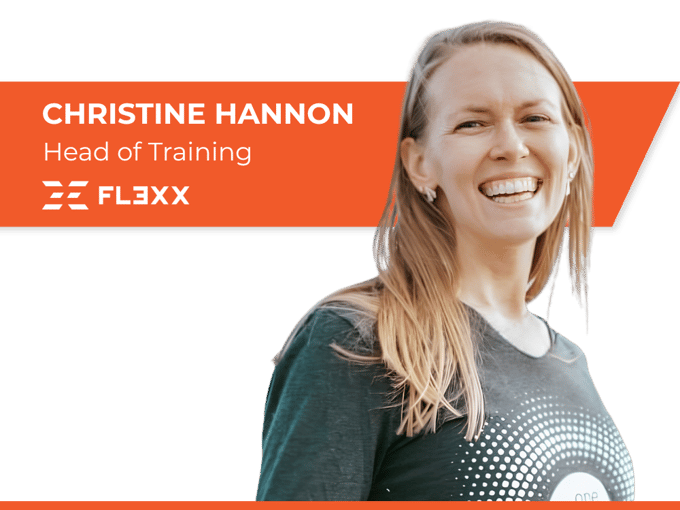
“Both technology and aviation are industries of continuous change and improvement,” Christine says.
For Christine, the opportunity was clear. Our trainers should not have to repeat the same introductory tutorial to every new customer around the world when computer-based training can deliver that material on demand, across time zones.
“It was an opportunity to give time back to FL3XX trainers to invest in the growth of our software and to increase the value of time spent with trainers to focus on practical application for each operator, rather than reviewing a glossary of filters and settings,” Christine says.
That distinction sits at the center of our training approach.
“Today, Computer-Based Training teaches users how FL3XX works. Instructor-Led Training teaches operators how to make FL3XX work for their operation.”
So what does the new LMS change for our customers?
1. Training that continues after onboarding.
Many software companies treat training as a one-time onboarding exercise. We don’t.
In aviation, operators are responsible for using the most up-to-date information. The same logic should apply to software training.
“If a company onboards with FL3XX today and hires a new employee next year, an updated computer-based training course will be more relevant than an obsolete recording from a year ago,” Christine says.
The LMS gives customers access to updated training that can be completed when users need it, rather than relying on old recordings or one-off sessions.
It also reflects how people actually learn.
“Not to mention that humans can more easily digest a series of 3-5 minute videos with chapters than a 2-hour recording of a meeting they were not a part of.”
For operators, that means new users can ramp up faster, existing users can refresh their knowledge, and teams can revisit features they may not use every day.
2. Continuous learning for a connected platform.
FL3XX brings together flight operations, sales, crew management, maintenance, reporting, and more. As the platform evolves, training has to support continuous improvement across the whole operation.
“The LMS is also built to accommodate recurrent training, so that existing users can refresh their knowledge, including reviewing features that they may use infrequently and new features they may have missed.”
That matters because the most successful operators do not simply add more tools to old processes. They adapt their standard operating procedures (SOPs) to get more out of the tools they use.
“Successful operators adapt their SOPs to the tools rather than adding more tools to their SOPs.”
The LMS gives customers a practical way to absorb product updates, improve adoption, and keep teams aligned as new features are released.
“FL3XX serves as the digital glass cockpit for your operation, bringing together flight operations, sales, crew management, maintenance, and reporting into a single, integrated system.”
Our courses are designed to reflect that breadth, with training tagged by audience and role. Sales teams can focus on quoting and pricing. Operations teams can focus on dispatch, crew planning, compliance, maintenance events, airport restrictions, and flight releases. Reporting users can build confidence in how to access and interpret operational data.
The LMS is also built by people who understand what our customers truly need from it.
“Courses are designed by aviators, for aviators,” Christine says.
That matters. Good training is not just about showing users which button to click. It is about helping teams understand how the platform supports real operational decisions.

3. Why “knowing the system” is not enough.
One challenge with any mature software platform is that users can become comfortable with the workflows they already know.
That confidence can be useful, but it can also create blind spots.
“Any seasoned aviator could talk about the ‘dirty dozen’ in human factors. Claiming to ‘know the system,’ indicates there may be norms and complacency in the company, which actually poses risk to safe and reliable operations.”
In aviation, recurrent training is normal. Teams are expected to refresh and prove their knowledge over time. We’re applying that same familiar model to software adoption.
“At the airlines, every employee from the ramp to the cockpit and everywhere in between must complete computer-based training, instructor-led training, and on the job training.”
For operators, that means training becomes part of operational discipline, not just implementation.
“Annual recurrent training is now also an expectation.”
4. Practical outcomes for operators.
The goal of FL3XX Training is not training for training’s sake. It is better day-to-day performance.
Typical outcomes include faster quoting, optimized dispatch workflows, better crew planning, improved reporting, and increased platform utilization.
“We want FL3XX to be your single source of truth, to which all of your other integrations (CAMO, flight planning, accounting, etc) are connected.”
Better platform knowledge helps teams work with more confidence. In sales, it supports valid itineraries and accurate pricing. In operations, it helps users manage risk and regulation across crew qualifications, limitations, maintenance events, airport restrictions, and flight releases.
“FL3XX systematically delivers alerts and warnings and training is essential to ensure they are configured correctly and understood by users in order to be respected in operational decision making.”
That is where training makes a real operational difference.
5. Certification that recognizes real knowledge.
A standout part of the new LMS is certification.
Users can complete training and earn digital certificates that recognize their learning and can be shared professionally.
For Christine, certification is not just about adding a badge at the end of a course. It is about encouraging deeper learning.
“We wanted to gamify learning to encourage users to learn more.”
She also sees certification as a response to the way people increasingly search for quick answers instead of building broader knowledge.
“In the generation of asking Google or AI a question rather than looking it up in a book, we are missing an opportunity for accidental learning, the learning that happens when you find something interesting on the page just before what you were looking for.”
That same thinking is behind how our Customer Support team often shares Knowledge Base articles. The goal is not only to answer the immediate question, but to help users keep learning.
Certification creates a visible way to recognize that effort.
“By earning a certificate from training, you have evidence that you didn’t just ask a question. You did the work and understood the knowledge.”
The result: stronger knowledge, stronger operations
The new FL3XX LMS gives operators a better way to learn, refresh, and improve.
It helps new users build confidence. It helps experienced users stay sharp. It helps teams adopt new features more effectively. And it helps operators get more value from a platform designed to connect their entire operation.
It also reflects our broader approach to customer partnership.
“At FL3XX, training is not a one-way street. It’s a circuit that includes a feedback loop based on the Kaizen method.”
That feedback will continue to shape the LMS as we expand, refine, and improve our courses.
“In aviation, during an audit, it is never acceptable to say, ‘I don’t know.’ While it is not necessary to know all of the answers when asked, it is necessary to be able to find them.”
That is what FL3XX Training is designed to support.
“With FL3XX Training, we want to be sure that we are providing the knowledge to answer your question to make the most of your software.”
The work continues.
“I am currently working on a Risk Management course for FL3XX Training, to be delivered via our LMS and complimented by our webinars.”
Christine will also be gathering regular feedback from users to understand which areas of continued learning would be most valuable next.
“I will also be sending out quarterly surveys to users registered for our LMS to discover other areas of interest for continued learning.”
As FL3XX evolves, our training will evolve with it. Because in aviation, standing still is rarely the safest option - and in software, it is rarely the smartest one.